
How Direct FreeCooling Reduces Data Center Costs: The Impact of Architecture on Cost Efficiency
The Heart of the Matter
In recent years, the construction, design, and operation of data centers for large companies in the public sector, manufacturing, technology, and IT industries have increasingly involved the implementation of Direct Free Cooling—a technology that uses direct natural cooling. This approach minimizes the use of air conditioners, which significantly reduces electricity bills and improves the data center’s energy efficiency.
This is not merely following trends, but a well-considered engineering solution driven by economic, environmental, and geographical factors, as well as operational convenience. Major cloud providers, banks, manufacturing companies, and telecommunications operators want to reduce OPEX, improve energy efficiency, and meet ESG requirements—thereby improving metrics related to their carbon footprint, including in non-financial reporting. Free cooling directly reduces CO₂ emissions, which helps ensure compliance with international standards (GRI, TCFD) and national environmental initiatives.
In recent years, power supply systems have changed significantly: modern UPS units achieve 97–98% efficiency, and with hybrid configurations and optimal load, even 99%. Their share of total energy losses has become minimal. The main consumer of energy in a data center (after computing itself) is now the cooling system. It is the modernization and optimization of this system that yields the greatest effect in reducing energy consumption.
Modern workloads—AI, machine learning, and HPC—require ever-increasing power capacities, which is why the construction of data centers has been added to the list of tasks of national importance. Traditional cooling systems can no longer handle racks with power consumption of 20–40 kW and higher without a sharp increase in costs. Direct Free Cooling, however, allows heat to be dissipated more efficiently and with lower capital investment in infrastructure. Studies confirm that equipment operates reliably even at 30 °C, and every additional degree saves 4–5% in electricity consumption. On average worldwide, data centers consume 3–5% of all electricity generated, and in some countries, up to 7%. A modern data center includes: servers, chillers, air conditioners, ventilation, security systems, fire suppression, video surveillance, lighting, access control, humidity and temperature monitoring, and primary and backup power supplies (UPS).
Technological Challenges and Solutions
According to data from major operators (Selectel, Yandex), traditional precision air conditioning systems can account for 40–50% of a data center’s total energy budget. Direct Free Cooling uses outside air directly to cool server rooms, almost or completely eliminating the need for compressors and chillers. In regions with a temperate climate, energy savings on cooling reach 30–50%, and sometimes up to 70% per year. For a large 10 MW data center, this translates to millions of rubles in annual savings. However, direct cooling isn’t feasible everywhere. For example, a data center in New Mexico (U.S.) with approximately 900 servers was cooled exclusively by outside air—the dry desert climate, with no humidity issues, prevented corrosion. In regions with high humidity (such as London or St. Petersburg), however, this method is virtually unusable—the equipment quickly fails.
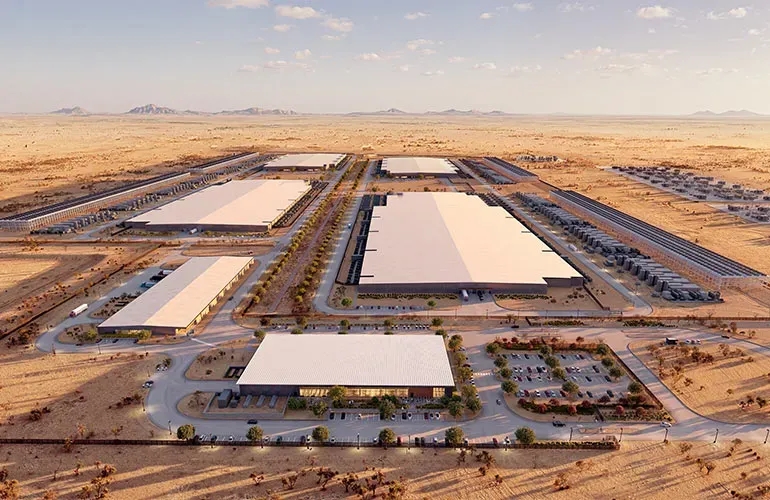
*Fig. 1. Data center project in New Mexico (photo: https://servernews.ru/1135963)*
Benefits and Technical Principles
How it works: During the warmer months, chillers cool the water; when the outside air temperature drops, the chillers shut off, and heat exchangers take over, transferring heat from the internal circuit to the outside. The process is automatic: the chiller turns on and off as needed, maintaining the set water temperature in the tanks. The operator intervenes only in case of abnormal situations. Implementing free cooling does indeed complicate the data center’s cooling system (especially in winter), but the energy savings fully offset these complexities. Under Russian climatic conditions, the average payback period is about 2.5 years, depending on the length and severity of the winter. Important: Almost all modern systems with free cooling are already actively used in data centers located in regions with a temperate climate, where the average annual temperature is 10–15 °C.
As for technical parameters: in classic configurations, the temperature in the “cold aisle” is maintained at 22 ± 2 °C. With Direct Free Cooling, the cold aisle temperature can rise to 35–40 °C, and in some projects, up to 45 °C (with humidity control and filtration). This allows for the use of outside air for most of the year. However, operating at an inlet temperature of 35–40 °C radically changes the requirements for the server platform:
- High processor TDP. Modern CPUs (4th-generation Intel Xeon Scalable, AMD EPYC Genoa/Bergamo) have a TDP of up to 350–400 W per socket. At 40 °C, the “processor-to-air” temperature difference decreases, making heat dissipation more difficult.
- Risk of other components overheating. VRMs, DDR5 memory, and NVMe drives also generate heat and are sensitive to ambient temperature.
- Disruption of airflow balance. Improperly designed servers can create “hot spots,” disrupt the overall airflow in the rack, and reduce the efficiency of the entire data center.
Corporate Solution and Conclusions
Key point: Any modern commercial or enterprise data center delivers real value only when it has high-quality network connectivity to the outside world. This means the ability to connect to global clouds, internet exchange points, and telecom operators, as well as to integrate directly with the IT resources of partners and contractors. This requires a modern, well-designed network. Such infrastructure can be built relatively inexpensively if the data center is located near major Internet traffic routes. Otherwise, even the most energy-efficient and technologically advanced data center will be unable to fulfill its primary function—ensuring high response times and the availability of IT systems for users and customers. Equally important is proximity to major power transmission lines with sufficient spare capacity. Without this, any savings on cooling risk being nothing more than a marketing gimmick with no real benefit.
ITGLOBAL.COM (ITG Corporation), as an international cloud provider and systems integrator, participates in the design and construction of IT infrastructure for enterprise customers worldwide (data centers in 11 countries). The company is seeing growing demand for data centers with direct free cooling from large businesses, the industrial sector, and the financial sector. We understand that the success of such projects depends not only on the building’s architecture but also on the right choice of server equipment capable of unlocking the data center’s energy-efficiency potential.
Selecting server equipment for various workloads
ITPOD (ITG Corporation) is a Russian manufacturer of server equipment that designs platforms specifically for modern workloads and operating conditions in energy-efficient data centers. Unlike many suppliers, ITPOD focuses not only on the computing power of processors but also on thermal architecture analysis and layout. In the most demanding configurations, EVAC heat sinks are used to ensure efficient heat dissipation from processors even with a TDP of 500 W, while RAM modules are equipped with individual heat sinks to protect against overheating under the most extreme temperature conditions. Great attention is paid to reliability and the use of industrial-grade components to ensure a long service life in harsh temperature conditions. ITPOD solutions enable large enterprises and cloud providers to build infrastructures that not only meet current energy efficiency requirements but are also ready for the growing workloads of tomorrow.
The transition to Direct Free Cooling is a strategic move for any large enterprise building or modernizing its data center. However, the effectiveness of this technology depends directly on how well the server equipment is adapted to operate under the new temperature conditions. Choosing a platform becomes a complex engineering challenge: one must consider the TDP of processors, airflow management within the server, and the reliability of components at elevated temperatures. As a technology partner of ITGLOBAL.COM, ITPOD offers server solutions designed to address these challenges, ensuring the stability and efficiency of modern data centers.