
Original NVIDIA H200 PCIe or OEM version: what's the difference for enterprise AI?
NVIDIA H200 PCIe for enterprise AI projects
In the corporate environment, the choice of a gas pedal for AI tasks is not always determined by dry figures from specifications or price list. In practice, failure to meet the deadlines of a pilot project, instability of inference at peak loads, complicated technical support conditions, as well as software and license policy restrictions cost businesses much more than the price difference between two seemingly similar graphics cards.
With the release of the NVIDIA H200 PCIe, the situation has become even more multifaceted. We are mainly talking about NVIDIA H200 NVL 141 GB PCIe Passive GPU models, which appear on the market in both original and modified OEM versions. Although they appear identical at launch, they are essentially two different products. The differences are not apparent at the time of initial launch, but rather during the operational phase, when infrastructure maintenance, upgrades, scaling, and SLAs are required.
Two implementation approaches: the original NVIDIA H200 PCIe and the customized SXM module in PCIe form factor
The original NVIDIA H200 in PCIe is a complete server card. Its thermal design, power system, chassis mechanics and firmware are inherently optimized to work in standard PCIe platforms. Server vendors form supported configurations around such gas pedals, and the customer gets a clear division of responsibility between the GPU manufacturer, server platform and integrator.
The so-called "OEM-version" of H200 PCIe is built on a different principle: the SXM module, originally designed for use in HGX-systems, is mounted on an adapter board for installation in a PCIe-slot. At the chip level it is the same GPU, so the cards may seem identical in functionality and performance. However, in the process of operation the differences appear due to the lack of NVIDIA's official warranty, as well as engineering compromises in cooling and power supply systems. SXM-modules were designed to work in HGX-systems with centralized cooling and heat package up to 700W at typical load. The original PCIe versions of the H200 are designed for 600W and a different heat dissipation profile in standard server chassis. Transferring the SXM module to PCIe format without taking into account these thermal design features is fraught with overheating, trottling and stability degradation under prolonged loads.
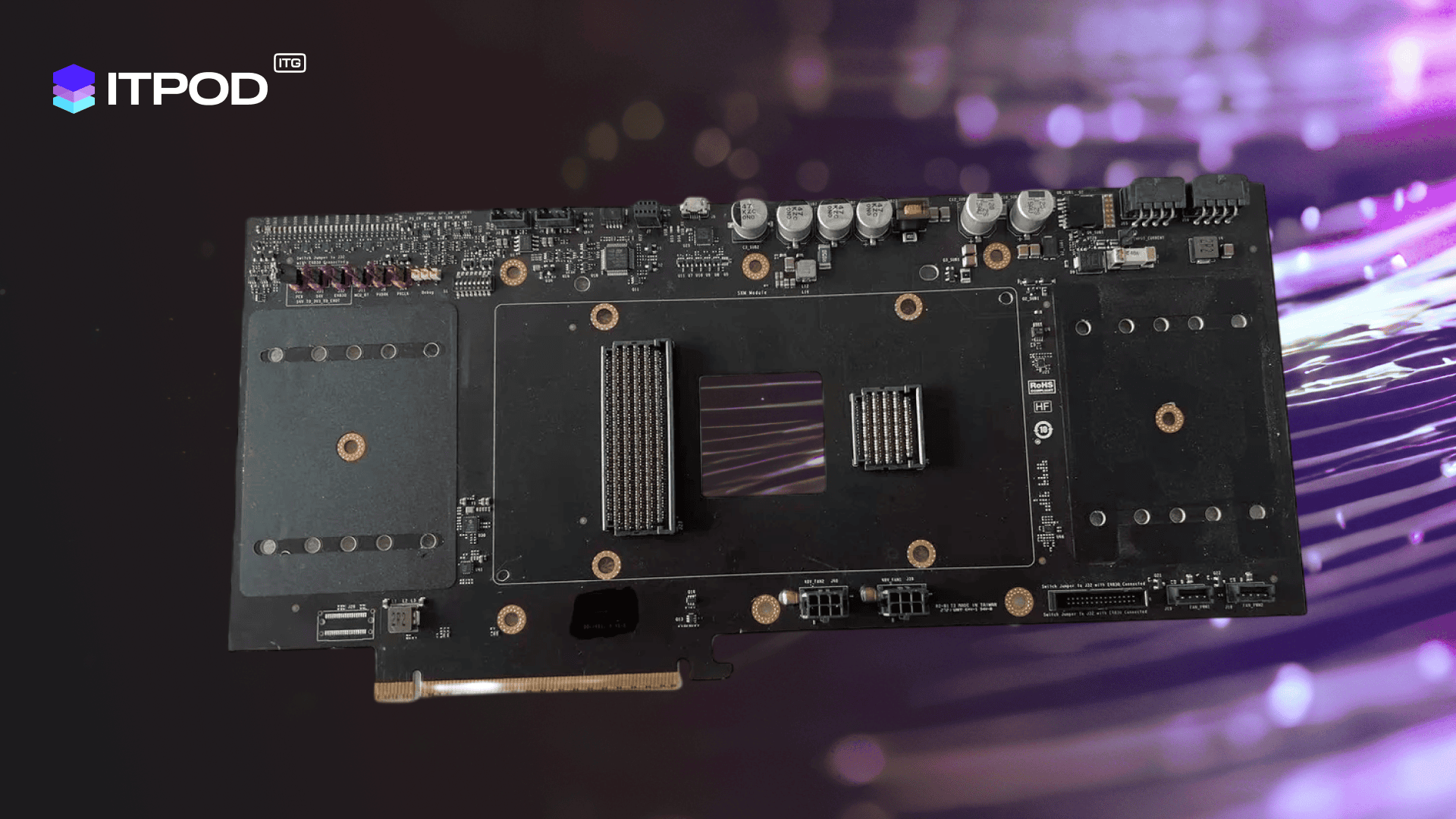
Fig 1. - Adapter board for installing an SXM-module into a PCIe-slot
Another important difference lies in the software. The original NVIDIA H200 NVL in the PCIe version comes with a five-year subscription to NVIDIA AI Enterprise Software (NVAIE), which sets a specific operating model. The customer gets not just a gas pedal, but access to an enterprise AI platform with formalized technical support and regular updates, which significantly reduces the risk of building and scaling industrial infrastructure.
The importance of the NVAIE software stack
If the choice of H200 PCIe were based solely on processing power, it would come down to price and delivery time. However, for the enterprise segment, the key benefit of the original cards is the included NVIDIA AI Enterprise. This is not just a license, but a supported software outline for industrial operation, which inherently provides a higher level of predictability and accountability than working on bare metal.
In practice, two approaches to organizing inferencing can be distinguished. vLLM provides maximum flexibility, but requires a highly skilled team: selecting environments, compatible drivers and CUDA versions, setting up optimizations, monitoring, updating components, and ensuring security. For teams just starting their AI journey, this is often a critical bottleneck. NVIDIA NIMs solve a different problem: they are supported containerized microservices for inferencing, optimized for specific GPUs. Their value is not in the delivery method, but in accelerating service commissioning and reducing operational risk through fixed configurations, centralized updates, and reproducibility at scale.
NVIDIA MIG (Multi-Instance GPUs)
Complementing this ecosystem is NVIDIA MIG (Multi-Instance GPU) technology, a hardware mechanism that allows a single physical gas pedal to be partitioned into multiple isolated instances. For the H200, a single GPU can be split into as many as 7 independent MIG instances, each with its own compute blocks, dedicated memory, and guaranteed resource isolation.

Figure 2 - NVIDIA MIG technology overview
In practice, this opens up the possibility of running multiple independent inference circuits instead of one large monolithic service. For example, various small models up to 8B parameters, such as LLaMA 3.1-8B or Mistral-8B, are hosted in their own MIG partitions without competing with each other for resources. The load on one model does not affect the stability of the neighboring model.
From pilot project to industrial operation
Because the ITPOD AI/ML Computing server line uses only NVIDIA original PCIe cards, customers have full access to all the benefits of NVIDIA AI Enterprise Software - maximizing performance and resource efficiency, including support for the latest optimizations and technologies. Together, this provides predictable SLAs, audit visibility, and minimizes risk when scaling enterprise AI solutions.
Want to build your AI infrastructure on proven solutions? Contact us